


A website for a theatre or arts organisation has a surprisingly difficult job to do.
It needs to capture some of the excitement of experiencing live performance, while making it incredibly easy for someone to find an event, choose a performance and buy a ticket.
It needs to serve regular visitors who know exactly what they’re looking for, while welcoming people who may never have stepped inside the venue before.
And beyond selling tickets, it may need to encourage donations and memberships, promote learning and participation programmes, communicate accessibility information, support fundraising and tell the wider story of the organisation and its impact.
Over the last few years at Hotfoot, we’ve designed and developed websites for a growing number of arts organisations in the UK and US, including Cincinnati Shakespeare Company, The Dukes in Lancaster and, most recently, Hudson Valley Shakespeare in New York.
As a Spektrix Partner, we’ve developed increasingly deep experience of integrating websites with Spektrix, alongside other leading ticketing and box office platforms.
And we’ve learned a lot along the way.
The website and box office need to feel like one experience
One of the most important things we’ve learned is that visitors don’t think about websites and ticketing platforms as separate systems.
They simply want to buy a ticket.
Behind the scenes, an arts organisation may have a website, CMS, CRM, box office platform, payment systems and other technologies working together. To the person trying to book two tickets for Saturday night, none of that matters.
The experience needs to feel joined up.
That means thinking about Spektrix integration from the beginning of a website project rather than treating it as a technical task to complete towards the end.
What information should appear on an event page? How should performances and availability be presented? When should someone enter the booking journey? What happens when they move between the website and Spektrix? What happens on mobile?
These decisions have a significant impact on the experience.
The aim is simple: remove as much friction as possible between discovering something you want to see and completing the booking.
Start with the audience, not the technology
Our projects usually begin well before we start designing screens.
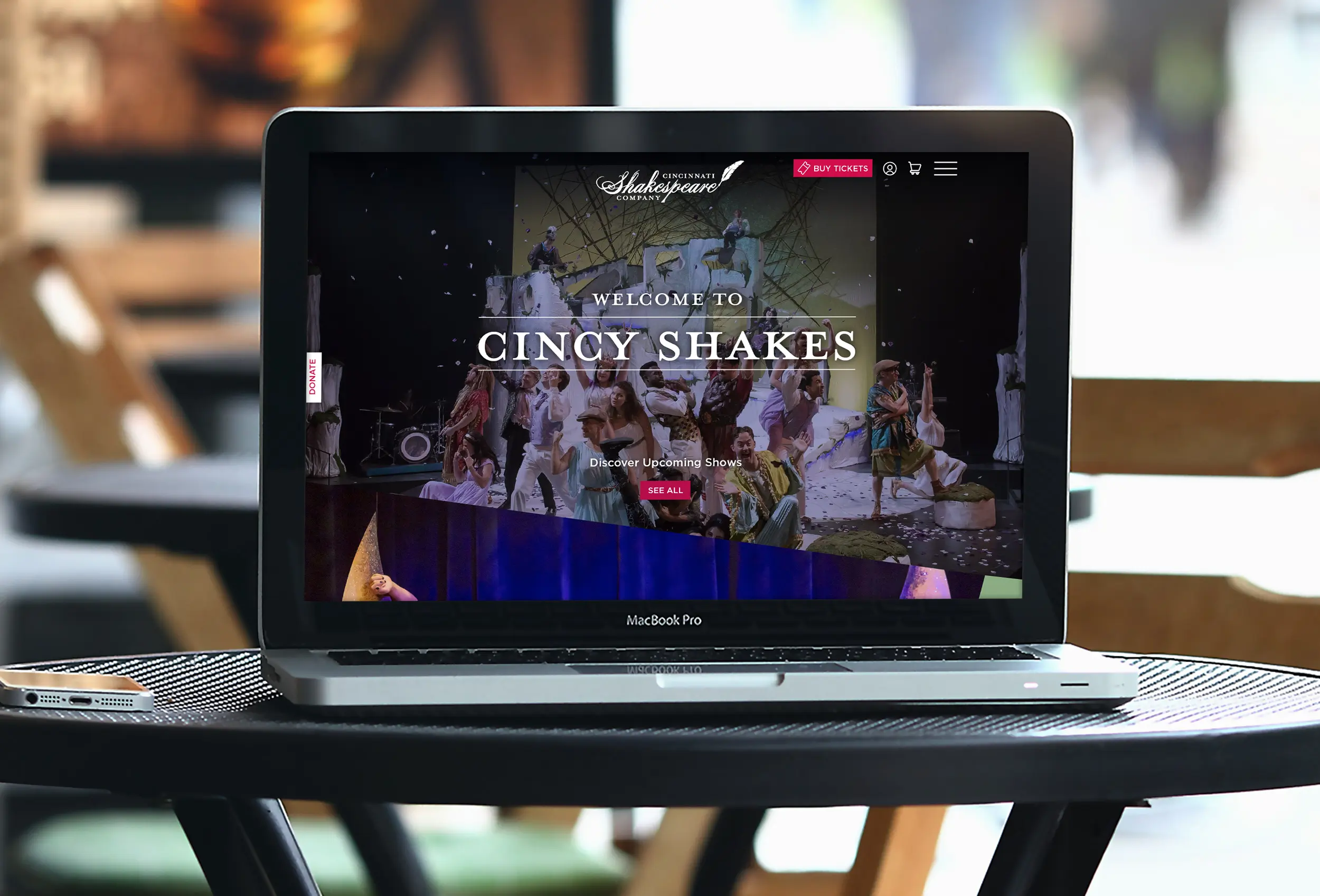
For Cincinnati Shakespeare Company, for example, our discovery process included stakeholder workshops and insight from a comprehensive customer survey.
That helped us understand not simply what the organisation wanted from its new website, but what its audiences needed from it.
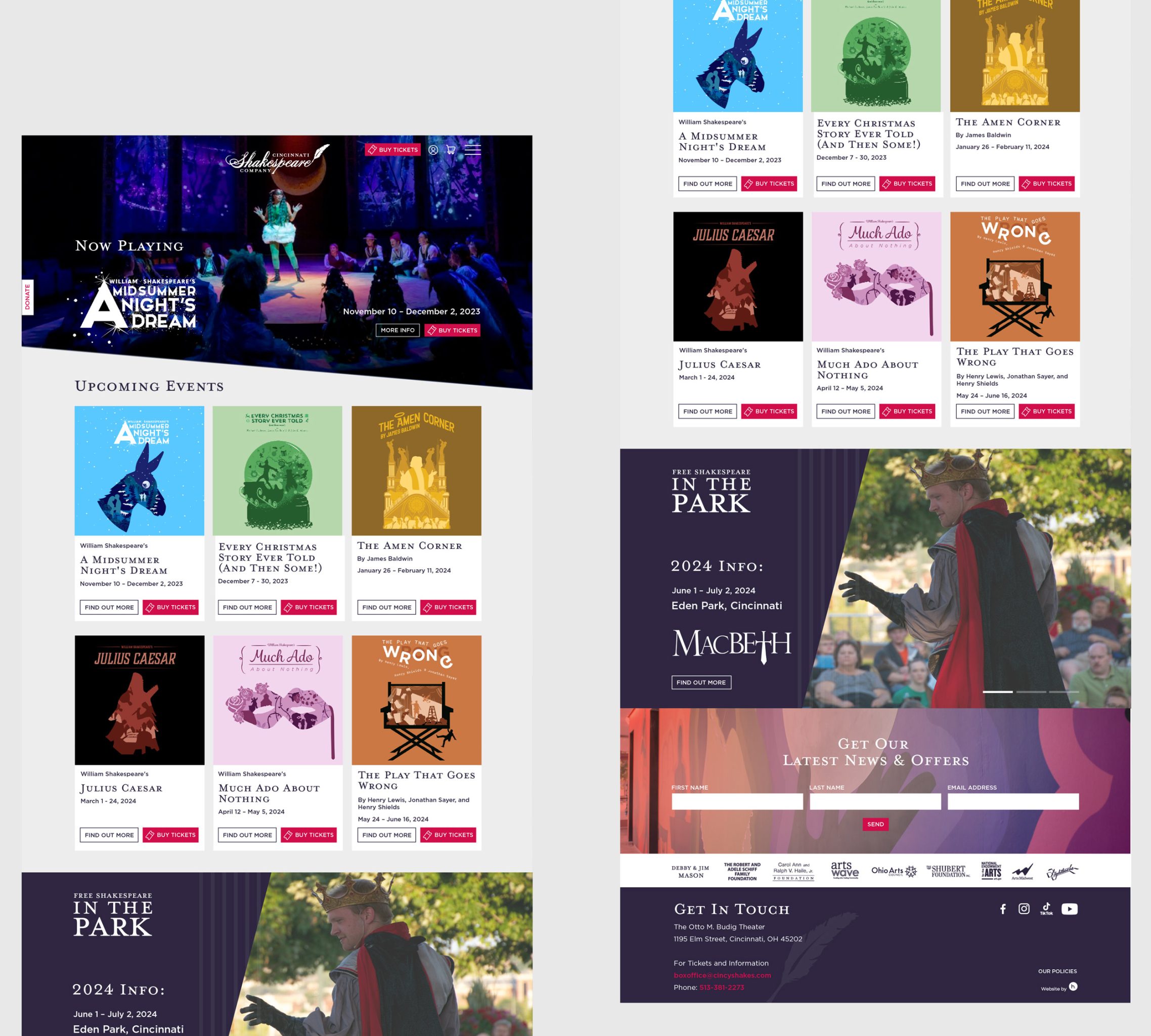
Cincy Shakes has a particularly broad offer. Alongside its mainstage productions, the organisation delivers education programmes, its hugely popular Shakespeare in the Park programme, community activity, subscriptions and fundraising.
The challenge wasn’t simply integrating all of this with Spektrix. It was creating an experience that made sense of it for the audience.
That’s an important distinction.
A technically excellent integration can still result in a poor website if the information architecture, content and user journeys surrounding it aren’t right.
Ticket sales matter, but they aren’t the whole story
It’s tempting to think of a theatre website primarily as a ticket-selling platform.
Clearly that’s enormously important. But arts organisations are usually much more complicated and interesting than their events calendar.
The website also has to communicate why the organisation exists.
For The Dukes, our work needed to showcase not only its programme as a producing theatre and independent cinema, but its wider cultural role and relationship with the communities it serves.
For Cincinnati Shakespeare Company, the website needed to support performances and subscriptions alongside education, community engagement, fundraising and donations.
And for Hudson Valley Shakespeare, the challenge has been broader still.
The organisation is entering a transformative period with the opening of its first permanent home, the Samuel H. Scripps Theater Center, on a remarkable 98-acre site in New York’s Hudson Valley.
The new website therefore needs to support ticketing through Spektrix, but also fundraising, hospitality, community engagement and expanding year-round programming, while communicating HVS’s ambitions around artistic excellence, accessibility and environmental sustainability.
The lesson is that the best arts websites shouldn’t feel like box office systems with some content wrapped around them.
They should communicate the full experience and purpose of the organisation, with ticketing woven naturally into that experience.

Make choosing something to see easy
Arts organisations often have complicated programmes.
Theatres can have plays, comedy, music, cinema, workshops, talks, family events, festivals and participatory programmes running simultaneously.
Internally, all of those distinctions make perfect sense. For audiences, they can quickly become overwhelming.
Good UX is therefore often about simplification.
At The Dukes, for example, audiences can quickly move between cinema, stage, workshops, gallery and festivals and events, while still having access to the much wider story of the organisation.
Filtering, categorisation, search, event cards, imagery and calls to action all need careful consideration.
And increasingly, they need to work brilliantly on a phone.
Someone seeing an Instagram post about a production and deciding to buy a ticket there and then shouldn’t encounter an experience designed primarily for somebody sitting behind a desktop computer.
Accessibility can’t be an afterthought
For organisations whose purpose is often fundamentally about making culture available to people, accessibility has to be integral to the digital experience.
That means going considerably further than adding an accessibility page.
We consider accessibility throughout information architecture, UX, design and development: from colour contrast, typography and hierarchy to keyboard navigation, semantic structure, forms and interactions.
It also means making practical accessibility information easy to find.
If somebody needs to know about wheelchair access, accessible performances, hearing assistance, parking or what to expect when they arrive, that information shouldn’t be buried three levels deep in the website.
A welcoming digital experience should be an extension of a welcoming physical one.

Don’t lose the emotion
There is another danger when designing a complex arts website.
You can become so focused on usability that you remove all the magic.
A theatre isn’t an insurance company.
The reason people ultimately visit is emotional. They want to laugh, cry, think, discover something, spend time with friends or experience something they couldn’t experience at home.
The website should capture some of that feeling.
Photography, film, typography, movement, storytelling and strong creative direction can create anticipation before somebody ever arrives at the venue.
For us, the challenge is finding the right balance between expression and usability.
The website needs personality, but never at the expense of someone being able to work out what’s on next Friday night.
The CMS matters too
There’s another audience for every arts website: the people running it.
Arts marketing teams work at pace. Shows change, events sell out, new performances are announced and campaigns need to launch quickly.
They shouldn’t need to contact their web agency every time something changes.
That’s why we put considerable emphasis on creating flexible content management systems that allow internal teams to manage their website confidently, while integrations with platforms such as Spektrix take care of the appropriate event and booking data.
A good website should make life easier for audiences and for the people behind the scenes.
Think beyond ticketing
Our experience with Spektrix has also reinforced the importance of looking beyond the individual transaction.
For Cincy Shakes, the integration supports ticketing, subscriptions, memberships and donations.
That creates opportunities to think about the complete relationship someone has with an organisation.
A first-time visitor might become a regular attendee. A regular attendee might become a subscriber or member. A long-term supporter might become a donor.
Digital experience can help support that journey.
Rather than asking only, “How do we sell this person a ticket?”, a more interesting question is, “How can digital help build a lasting relationship between this person and the organisation?”
Every organisation is different
Perhaps the biggest lesson from all of these projects is that there isn’t a template for a great arts website.
Cincinnati Shakespeare Company is different from The Dukes.
The Dukes is different from Hudson Valley Shakespeare.
And all three are different from organisations such as Lancaster Arts and the Victoria Wood Theatre, where we’ve integrated websites with other ticketing and box office platforms like Ticketsolve.
The technology can provide the foundations, but the digital experience still needs to reflect the organisation’s audiences, personality, programme, ambitions and place.
That’s why our starting point is never simply, “How do we integrate Spektrix?”
It’s: “What experience are we trying to create for your audiences, and how can the website and technology work together to deliver it?”

Creating better digital experiences for the arts
We’ve worked with arts and cultural organisations for more than 20 years, from theatres and cinemas to festivals, museums and visitor attractions.
Our recent work with Cincinnati Shakespeare Company, The Dukes and Hudson Valley Shakespeare has allowed us to combine that sector experience with increasingly deep expertise in Spektrix integration, alongside our work with other platforms including Ticketsolve and PatronBase.
The technology matters. But ultimately, the goal is bigger than an integration.
It’s about creating a digital experience that reflects what makes an organisation special, welcomes more people in, makes discovering and booking experiences effortless and helps build stronger relationships with audiences and supporters over time.
Because buying a ticket shouldn’t feel like using a piece of software.
It should feel like the beginning of the experience.